
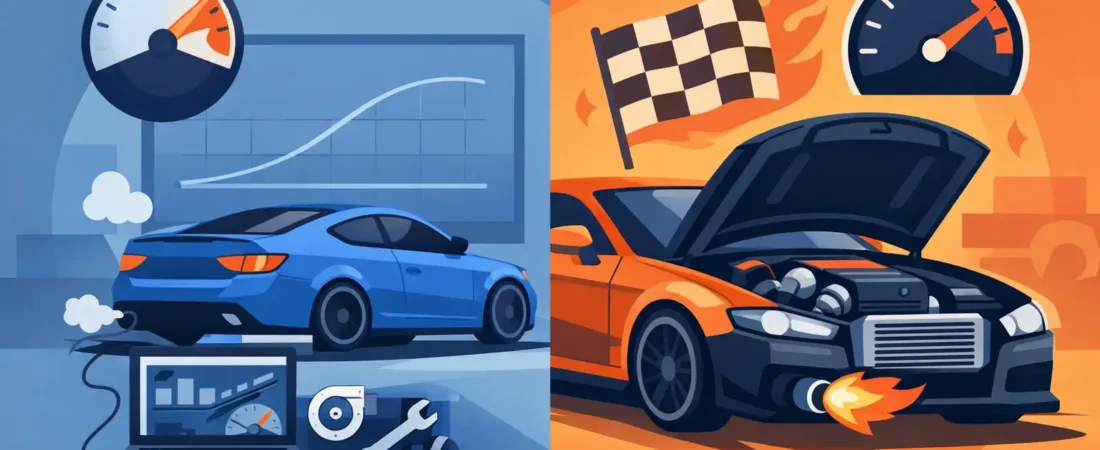
A lot of drivers ask the same thing after looking into remapping – what is the real difference in stage 1 vs stage 2 tuning, and which one is actually worth doing? The short answer is that both aim to improve performance, but they are built around different levels of hardware, different expectations, and different budgets.
This is where people often get caught out. They hear bigger numbers, assume stage 2 is simply “better”, and skip over the part that matters most – whether the car is suitable, whether the supporting parts are there, and whether the extra cost brings a result they will genuinely notice in daily use.
What stage 1 vs stage 2 tuning really means
At a basic level, stage 1 tuning usually means a software-only upgrade on a mechanically healthy standard vehicle. The ECU calibration is adjusted to improve power delivery, torque, throttle response and overall drivability, while staying within the limits of the factory hardware.
Stage 2 tuning goes further. It still involves software changes, but it is designed around supporting modifications. That usually means parts such as an upgraded intake, freer-flowing exhaust components, intercooler improvements, or other hardware that allows the engine to breathe and perform more effectively.
The exact definition can vary from one vehicle to another. There is no single industry rulebook that says every stage 1 or stage 2 setup must include the same parts. That is why the car itself matters more than the label.
Stage 1 tuning – the practical option for most drivers
For most road cars, stage 1 is the most sensible place to start. It gives a noticeable improvement without turning the job into a larger build. On turbo petrol and turbo diesel vehicles in particular, a well-written stage 1 remap can make the car feel sharper, stronger through the mid-range, and easier to drive.
This is why stage 1 is popular with everyday drivers as much as performance-minded owners. You are not chasing a spec-sheet number for bragging rights. You are making the vehicle respond better when pulling away, overtaking, joining faster roads or carrying weight.
Done properly, stage 1 should feel like the car is operating closer to its real potential rather than being pushed beyond reason. In many cases, that makes it the better choice for someone who uses the car every day and wants results they can feel straight away.
What you normally need for stage 1
Usually, not much beyond a healthy vehicle. The engine, turbo, clutch, injectors and sensors all need to be in good order, and any existing faults should be dealt with first. Remapping a car with underlying mechanical issues is never the right approach.
If the car is already struggling with boost leaks, poor fuel delivery, warning lights or emissions-related faults, those problems need sorting before performance software is considered. A remap should improve a good vehicle, not disguise a bad one.
Stage 2 tuning – more involved, more dependent on hardware
Stage 2 tuning is where the conversation becomes more specific. You are no longer relying on software alone. The map is written to work with supporting modifications, and without those parts, the claimed benefits do not stack up.
For many cars, stage 2 is built around improved airflow and better heat control. If the engine can move air more efficiently and keep intake temperatures more stable, the tuner has more room to increase performance safely and consistently.
That does not mean every driver needs it. Stage 2 makes more sense when the owner wants more than a straightforward road setup and is prepared for the extra cost and mechanical involvement that come with it.
Common stage 2 supporting modifications
The parts vary by vehicle, but stage 2 setups often involve a high-flow intake, upgraded intercooler, sports cat or de-cat arrangement where appropriate, and sometimes other changes to help fuelling or cooling. On some platforms, a stronger clutch may also become necessary once torque rises.
This is where costs can climb quickly. The software itself is only one part of the job. The total bill depends on the quality of the hardware, how the car responds, and whether anything else needs upgrading to cope with the extra output.
Is stage 2 always faster than stage 1?
On paper, yes, stage 2 will usually produce more power than stage 1 on the same vehicle. In the real world, it depends how the car is used.
A strong stage 1 setup on a healthy daily driver often gives the biggest improvement per pound spent. It is the point where many owners get exactly what they wanted – a quicker, more responsive car that still behaves well in traffic, on longer runs and in normal day-to-day use.
Stage 2 can be more rewarding for the right owner, but the difference is not just about peak figures. You need to consider traction, gearbox behaviour, clutch condition, tyre quality and how often you actually drive the car hard enough to use the extra performance.
If the car spends most of its time commuting around Kent or doing school-run and work mileage, stage 1 may be the sweet spot. If it is a weekend car or you simply want a more serious setup and understand the trade-offs, stage 2 may be worth it.
Cost, reliability and drivability
This is usually where the decision gets made.
Stage 1 is cheaper because it does not normally require extra hardware. It is also simpler, which matters. Fewer changes generally mean fewer variables, and that tends to suit drivers who want better performance without turning the vehicle into a project.
Stage 2 costs more because parts, fitting and setup all come into play. In some cases, it can also expose weak points that were tolerable at stock power but not once torque increases. A tired clutch is a common example. The remap did not create the wear, but the extra load makes it obvious.
Reliability always depends on the condition of the car and how sensible the calibration is. A healthy vehicle with a properly written stage 1 map can remain very usable and dependable. A badly maintained car with an aggressive tune, whether stage 1 or stage 2, is asking for trouble.
Drivability matters as much as power. Bigger numbers are pointless if the car becomes jerky, smoky, inconsistent or unpleasant to use. Good tuning should improve the way the vehicle drives, not just what it prints on paper.
Stage 1 vs Stage 2 tuning for diesel vehicles
Diesel owners often see strong gains from stage 1 because turbo diesel engines usually respond well to careful ECU changes. The increase in torque can make the car feel far more capable in everyday driving, especially at lower revs.
Stage 2 diesel setups can work well too, but they need the same sensible approach as petrol cars. Supporting hardware, engine condition and the vehicle’s existing emissions-system status all matter. If the car already has DPF, EGR or AdBlue-related issues affecting performance, those need to be properly assessed before talking about higher-stage tuning.
For many diesel drivers, the best result is not always the most extreme option. It is often a setup that restores smooth running, sharpens response and gives usable torque without creating extra headaches.
Which one should you choose?
If you want a clear answer, choose stage 1 if your car is standard, healthy and you want better performance without getting into additional modifications. It is the right fit for most daily driven vehicles.
Choose stage 2 if you already have, or are willing to fit, the right supporting parts and you want to go beyond what a software-only tune can offer. It suits drivers who understand that the gains come with added cost and more attention to the overall setup.
The wrong approach is choosing by badge value alone. Stage numbers can sound impressive, but the right tune is the one that matches the vehicle, the budget and the way it is actually used.
Before tuning, check the basics
Before any map is loaded, the car should be assessed properly. Service history matters. Fault codes matter. Air leaks, fuelling problems, worn ignition components, clutch wear and boost issues all matter. If the base vehicle is not right, no software will fix that.
This is also why speaking to a specialist matters more than chasing generic claims online. A proper tuner will tell you what the car can realistically achieve, what supporting parts are needed, and whether stage 1 or stage 2 is the sensible route.
For most owners, the best result is not the most extreme figure. It is a car that starts, pulls, overtakes and drives exactly as it should – only better.